
The wildfires that affected Spain and France in July 2026 once again demonstrated that an emergency of this scale does not only threaten people, homes and ecosystems. It can also place power grids, telecommunications, water systems, emergency centres and other essential infrastructure under severe pressure.
By 27 July, the European Commission estimated that more than 300,000 people had been displaced across the two countries. The scale of the emergency led to the mobilisation of aircraft, helicopters, firefighters, vehicles and international response teams through the EU Civil Protection Mechanism.
In simple terms: energy continuity during a major wildfire does not mean keeping every facility fully operational. It means ensuring that the equipment required to protect people, coordinate the response and begin recovery can continue operating when the power grid is unavailable or must be shut down for safety reasons.
In Spain, approximately 140,000 hectares burned between 13 and 28 July, mainly as a result of major fires in the central and eastern parts of the country. In France, the Gironde and Landes wildfires burned more than 40,000 hectares and led to the evacuation of approximately 220,000 people.
The scale of these events was intensified by a combination of extreme heat, dry vegetation and weather conditions that supported the rapid spread of fire.
An analysis by World Weather Attribution concluded that similarly severe fire-weather conditions are now at least 20 times more likely in central Spain and at least twice as likely in south-western France because of human-induced warming.
These findings reinforce an important reality for public authorities, organisations and businesses: preparation for extreme events must include not only evacuation and firefighting plans, but also the continuity of essential services.
Electrical infrastructure is often exposed to the same conditions that make emergency operations difficult.
Heat, smoke, falling trees and the proximity of flames can affect power lines, substations and other equipment. In certain situations, parts of the grid may also need to be switched off preventively to protect firefighters and allow them to work safely.
During the Gironde and Landes wildfires, teams from RTE, the French electricity transmission system operator, joined the incident command structure. Their objective was to protect the electrical infrastructure required to supply homes, emergency centres, reception facilities, telecommunications networks and other sensitive infrastructure.
Some power lines and substations were de-energised at the request of firefighters, while the remaining network was adjusted in real time to limit the consequences of potential unavailability.
This example demonstrates that energy continuity does not begin only after an outage. It begins with the ability to anticipate different scenarios, define priorities and adapt operations quickly.
During an emergency, not every electrical load has the same importance. The first step in a continuity plan is to identify the equipment whose interruption could compromise lives, communications or essential processes.
Command Centres and Civil Protection Services
Incident command posts, fire stations and coordination centres need electricity for communications, lighting, IT equipment, charging systems, pumps and operational controls.
Without power, the ability to receive information, deploy resources and coordinate teams may become limited precisely when it is needed most.
Telecommunications Networks
Antennas, repeaters, transmission equipment and technical centres are essential for emergency calls, public warnings and communication between authorities.
For this type of infrastructure, backup power should be combined with suitable autonomy and, whenever possible, remote monitoring. Grupel solutions for telecommunications can incorporate automatic transfer systems and GSM- or Ethernet-based remote supervision.
Water Supply and Treatment Systems
Pumping stations, water collection systems, distribution networks and treatment plants depend on electricity to maintain essential processes.
A prolonged interruption can restrict water supplies, make emergency operations more difficult or create environmental risks associated with the shutdown of treatment systems.
Hospitals, Care Homes and Reception Centres
Hospitals, clinics, care homes and facilities temporarily used to receive evacuated residents require power for lighting, medical equipment, ventilation, refrigeration, communications and the preservation of food or medicines.
Industrial and Logistics Infrastructure
Factories, airports, ports, railway networks and logistics centres may need to maintain safety systems, carry out controlled shutdowns or protect sensitive equipment and goods.
In these environments, generator sets may be used for emergency or continuous operation and must provide suitable reliability, autonomy, robustness and remote-management capability.
A generator set is an important part of an energy continuity strategy, but it is not a standalone solution.
Preparation should begin with a technical assessment of the critical loads:
The system should also consider automatic transfer, refuelling capacity, remote monitoring, alarms, maintenance access and protection against heat, dust, smoke and adverse weather conditions.
Regular testing is equally important. Equipment that has not been tested under conditions close to the expected operating load may not perform correctly during a real emergency.
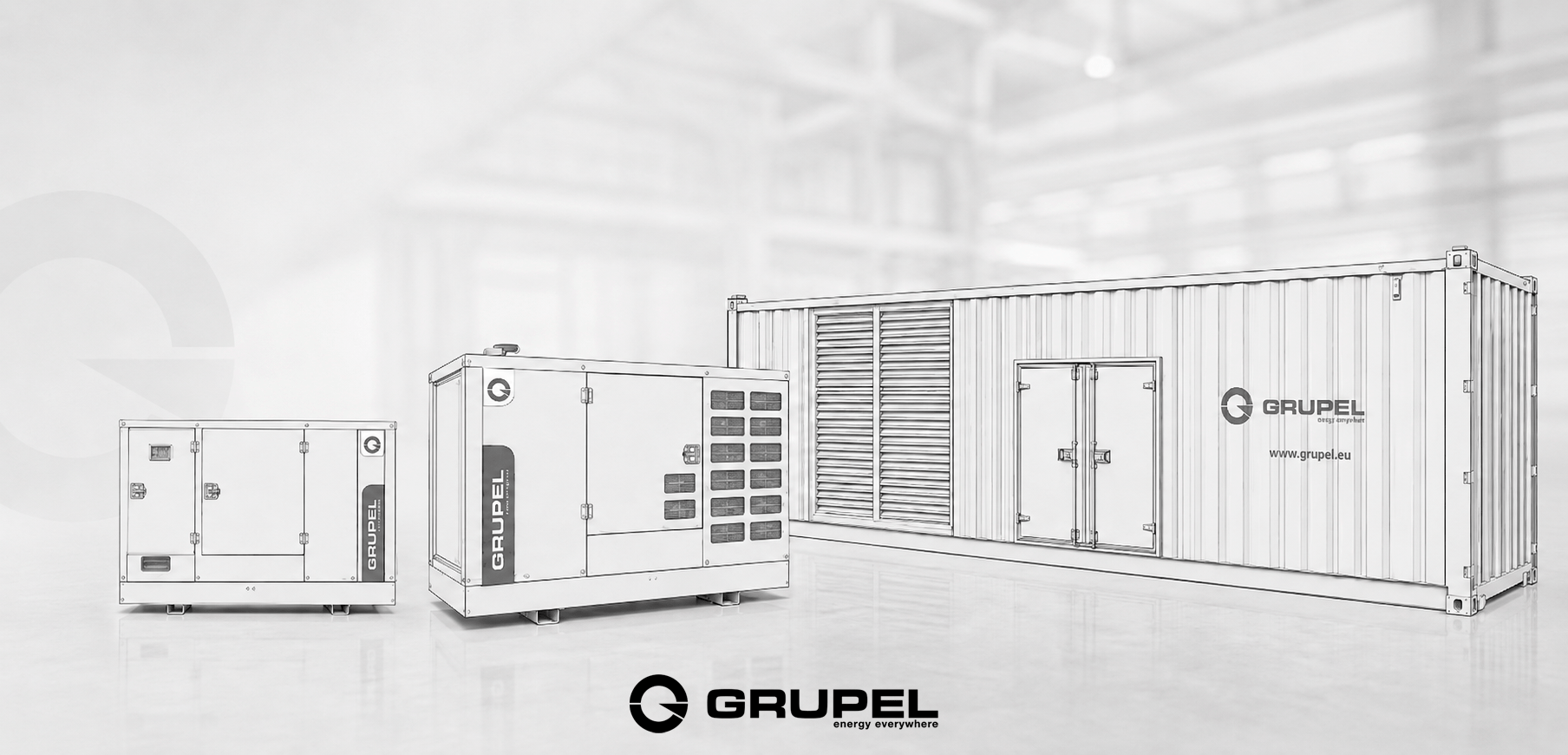
Grupel is not involved in the current wildfire response operations in Spain or France. Its connection to this subject comes from its experience in developing power solutions for facilities where an interruption could compromise essential services.
One example is the 45 kVA generator supplied to the Vagos Volunteer Fire Department in Portugal. The unit was designed for emergency operation and equipped to respond quickly following a failure of the main power source.
In the water-treatment sector, Grupel developed a standby solution for the Los Vados wastewater treatment plant in Granada, Spain. The project includes three generator sets rated at 500, 725 and 1100 kVA, which supply different areas of the facility when the power grid fails.
Grupel’s experience also covers telecommunications, healthcare, industry, transport and other critical infrastructure, with solutions adapted to the technical and environmental conditions of each project.
Depending on the requirements, these solutions may include:
The objective is not to power every part of a facility indiscriminately. It is to ensure that the loads that genuinely need to remain operational continue to receive power.
No backup power system can prevent a wildfire or replace the work carried out by emergency services.
It can, however, help command centres, telecommunications networks, water systems, healthcare facilities and other essential infrastructure continue performing their role when the public power grid is unavailable.
The events in Spain and France demonstrate that preparation cannot begin after the power has already failed. It must include the early identification of critical loads, correct system sizing, preventive maintenance and regular testing.
Because when power is essential to protecting people and operations, continuity must be planned before the emergency.
Information and events reviewed up to 31 July 2026.
share this
Stay up to date with the news about Grupel's products and services.



Co-funded


